Choose a cold plunge tub by checking the installation and ownership requirements before comparing finishes or accessories. A vessel, a vessel with chiller connections, and a complete chilled system are different purchases. Start with the space you can actually provide, the water-handling routine you can maintain, and a written list of what the package includes. This guide concerns equipment selection, not bathing protocols or health outcomes.
Define the complete purchase
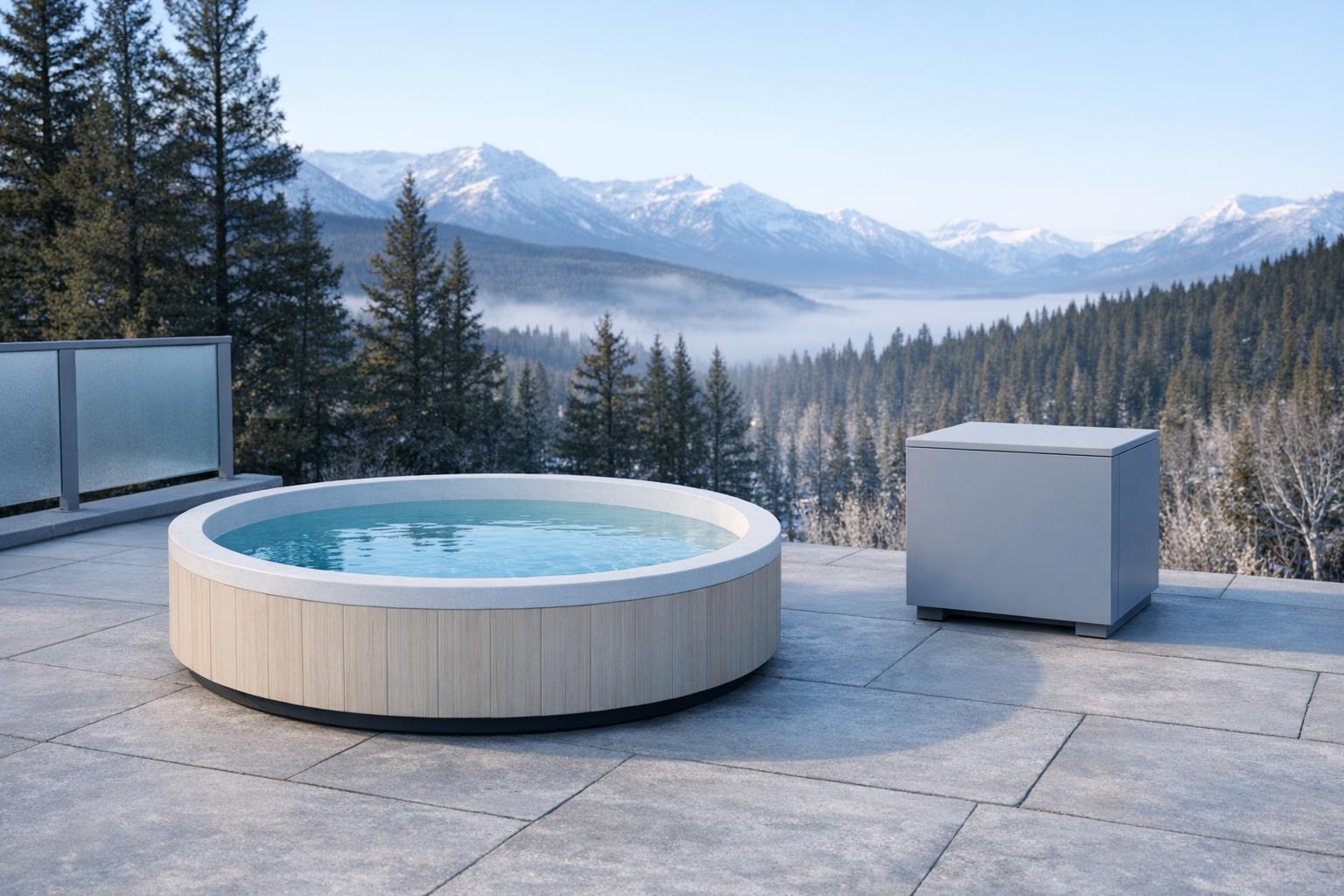
Write down whether you want a tub used with separately supplied ice, a matched tub-and-chiller kit, or an integrated system. Do not let a photograph decide this for you. Listings can show optional equipment, and a chiller pictured beside a tub may be sold separately. Record the exact model and selected variation, then check the box contents. A standalone chiller is not a cold plunge tub and should not be compared as though it provides the vessel.
A simple tub can be a sensible purchase when its filling, emptying, and storage requirements fit your home. A kit adds powered equipment and maintenance obligations, not just convenience. Our tub versus chiller kit guide separates these categories and explains what to ask when a bundle description is incomplete. Do this classification before sorting products by price.

Measure the usable installation
External length and width are only the first measurements. Add the open lid, steps if required, the path used to approach the tub, and access to the drain. For a separate chiller, include its enclosure, hose routing, ventilation space, and the room needed to remove its filter. Tape the proposed arrangement on the ground and walk around it without stepping over imaginary hoses.
Published clearances are model-specific. Plunge's Evolve Standard manual requires ventilation and service space around its chiller; the All-In manual assigns different clearances to different sides of its enclosure. Neither is a universal rule for every brand. Use the exact manual rather than copying a neat layout from an advertisement. The placement checklist turns these requirements into a site plan. [1] [2]
Check fit without confusing capacity and comfort
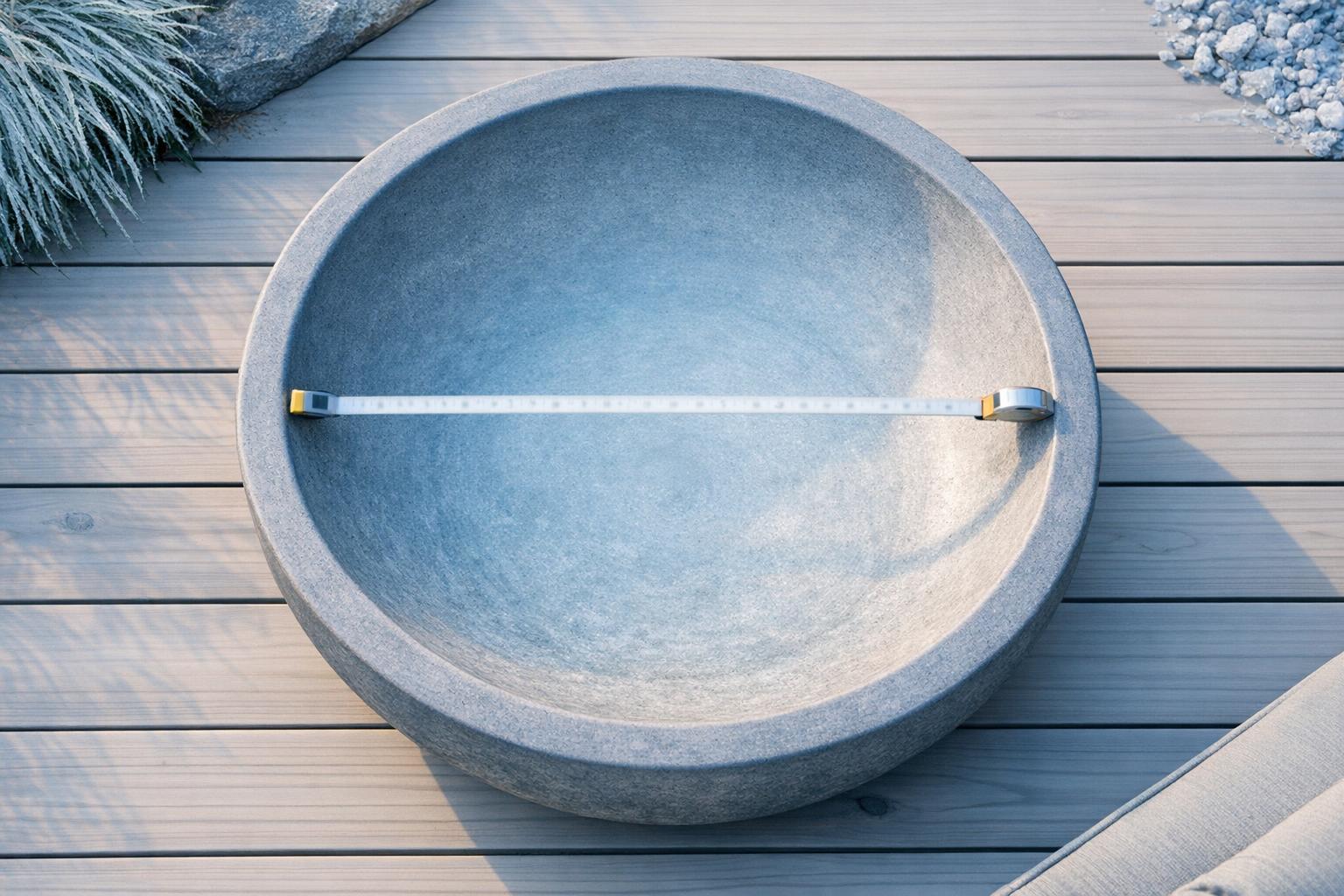
Ask for internal dimensions at the base and opening, not just the shipping dimensions. A broad rim or thick wall can make the usable interior smaller than the footprint suggests. A seat or sloped back changes the available space again. Compare the opening, interior depth, and entry arrangement with the intended users' needs; a stated gallon capacity does not answer those questions.
Distinguish maximum vessel capacity from the manufacturer's working fill level. Water needs room for displacement, and different tubs have different fill instructions. The Plunge Air manual, for example, specifies a particular distance below the rim for that model. Do not transplant it to another vessel. Our sizing worksheet covers these measurements and the separate question of support beneath a filled tub. [5]
Treat the drain as a buying feature
Identify where the drain is located, how it opens, and what hose connection it accepts. Check whether you can reach the valve with the tub in its final position. A drain against a wall is not useful if accessing it requires moving a filled vessel. Also ask how remaining water is removed after the main flow has stopped and whether connected equipment has separate drain points.
Decide where the discharge may legally go before ordering. Local wastewater rules and the treatment products used can affect that decision. Do not assume a street drain, garden bed, or shared balcony outlet is acceptable. Where the route involves a pump or plumbing alterations, get suitable professional advice. The All-In manual distinguishes its main drain from a separate winterization drain, illustrating why one visible valve may not empty an entire system. [2]
Compare maintenance access and replacement parts
Read the cleaning instructions and identify the consumables by part number. Can you buy the correct filter locally or directly from the manufacturer? Can the housing open in your proposed layout? Are replacement seals, caps, covers, and hoses identifiable? Those practical details may matter more over time than an extra display feature. Ask how damaged parts are handled and whether the seller or manufacturer supplies support.
Do not infer a maintenance schedule from another tub's advertising. Plunge publishes a residential schedule for specific Evolve Standard combinations and explicitly says outdoor conditions can require more frequent service. That is evidence of a model-specific obligation, not a promise that every cold plunge can follow the same timetable. Save the actual manual and plan the required tasks before the package arrives. [4]
Make a short, defensible final list
For each candidate, record the vessel type, included cooling equipment, internal and external dimensions, documented installation conditions, drain arrangement, required consumables, and warranty contact. Mark missing answers as unknown rather than giving the product credit for them. Send the seller specific questions with the model identifier; a general assurance that a tub is easy to install is not a substitute for documentation.
Choose among the models that pass those practical checks. Avoid paying for a larger or more complicated system simply because its specification looks impressive. Keep delivery access, electrical work where needed, water handling, and replacement supplies in the total budget. This is a documentation-based buying process, not a claim that we have physically tested the products. The strongest choice is the tub whose real requirements you can accommodate consistently.
Sources and further reading
- Manual and Setup Guide for the Plunge Evolve Standard Chiller
Do not use an extension cord with your Evolve Standard Chiller.
- Manual and Setup Guide for the Residential Plunge All-In
Place the Plunge on a solid, level, waterproof surface.
- Caring For Your Plunge Evolve Tub and Standard Chiller
These recommendations are for residential use only.
- Manual and Setup Guide for the Plunge Air Tub
Clear the area where you intend to place the Plunge of debris.